Background References Tables. Background. Serial dilution tests measure the concentration of a target microbe in a sample with an estimate called the most. Understanding Laboratory Wastewater Tests I. ORGANICS BOD, COD, TOC, O GDr. Brian Kiepper,Biological Agricultural Engineering and Poultry Science Departments. Since the implementation of the Clean Water Act and subsequent creation of the United States Environmental Protection Agency USEPA in the early 1. At the same time, population and production increases have increased water use, creating a corresponding rise in wastewater quantity. D microfluidic paperbased analytical device performs ELISA with colorimetric results. Two components enable separation of reagents in the device a sliding. Steps to validate flow cytometry results and improve reproducibility. For scientific results to be valuable, they must be reproducible. There is significant concern. DUCKWEED A tiny aquatic plant with enormous potential for agriculture and environment. ForteBio References in Literature. Overexpression of CryoglobulinLike SingleChain Antibody Induces Morular Cell Phenotype via LiquidLiquid Phase Separation in. This increased water use and process wastewater generation requires more efficient removal of by products and pollutants that allows for effluent discharge within established environmental regulatory limits. The determination of wastewater quality set forth in environmental permits has been established since the 1. Organics A determination of the concentration of carbon based i. Biochemical Oxygen Demand BOD, Chemical Oxygen Demand COD, Total Organic Carbon TOC, and Oil and Grease O G. Solids A measurement of the concentration of particulate solids that can dissolve or suspend in wastewater e. Total Solids TS, Total Suspended Solids TSS, Total Dissolved Solids TDS, Total Volatile Solids TVS, and Total Fixed Solids TFS. Nutrients A measurement of the concentration of targeted nutrients e. Physical Properties and Other Impact Parameters Analytical tests designed to measure a varied group of constituents directly impact wastewater treatability e. Example Four Fold Serial Dilution' title='Example Four Fold Serial Dilution' />H, turbidity, odor. Figure 1. Interaction of wastewater analytical categories and laboratory tests. Although wastewater analytical tests are often separated into categories, it is important to understand that these tests are not independent of each other Figure 1. In other words, a contaminant identified by one test in one category can also be identified in another test in a separate category. For example, the organics in a wastewater sample represented by BOD will also be represented in the spectrum of solids, either as suspended TSS or dissolved TDS particulates. For most people a complete understanding of the standard methods required to accurately complete critical wastewater analytical tests is not necessary. However, a fundamental understanding of the theory behind and working knowledge of the basic procedures used for each test, and the answers to commonly asked questions about each test can be a valuable tool for anyone involved in generating, monitoring, treating or discharging process wastewater. This publication is designed to provide a solid working knowledge of one of the major wastewater analytical test categories ORGANICS. ORGANICS BOD, COD, TOC, O G Analytical tests aimed at establishing the concentration typically in mgL or ppm of organic i. Today there are four common laboratory tests used to determine the gross amount of organic matter i. L in wastewater BOD biochemical oxygen demandCOD chemical oxygen demandTOC total organic carbonO G oil and greaseIs My Wastewater High Strength Wastewater generated by commercial, industrial and institutional facilities is typically referred to as high strength compared to typical household wastewater. Mark_Sarvary/publication/273457358/figure/download/fig5/AS:294798566150148@1447296863490/Figure-7-Serial-Dilution-of-an-initial-sample-or-culture-to-obtain-solutions-that-are.png' alt='Example Four Fold Serial Dilution' title='Example Four Fold Serial Dilution' />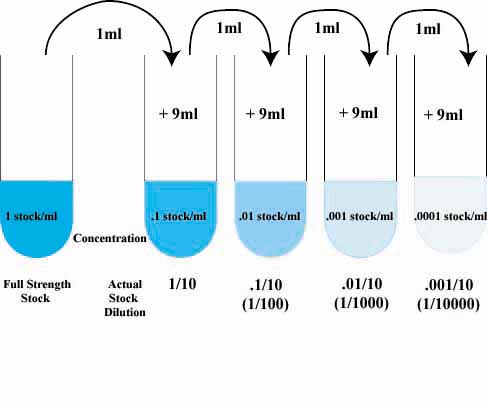
 Table 1 shows the typical concentrations mgL of organics found in untreated domestic wastewater. This table can be used to understand how non sanitary process wastewater compares to typical domestic wastewater. Table 1. Typical concentrations of organics in untreated domestic wastewater. Constituents. Unit. Typical Concentration. Low. Medium. High. BOD biochemical oxygen demandmgL1. COD chemical oxygen demandmgL2. TOC total organic carbonmgL8. O G oil and greasemgL5. Adapted from Metcalf Eddy, Inc., 2. Wastewater Analytics Acronyms Organics BOD COD chemical oxygen demand. TOC total organic carbon. O G oil and grease. Solids TS total solids. TSS total suspended solids. TDS total dissolved solids. TVS total volatile solids. TFS total fixed solids. Nutrients NH3 ammonia. TKN total Kjeldahl nitrogen. N N nitritenitrate. TP total phosphorus. BOD biochemical oxygen demand. BOD is the traditional, most widely used test to establish concentration of organic matter in wastewater samples i. BOD is based on the principle that if sufficient oxygen is available, aerobic biological decomposition i. The BOD test is also known as BOD5 since it is based on the accurate measure of DO dissolved oxygen at the beginning and end of a five day period in which the sample is held in dark, incubated conditions i. C or 6. 8F. The change in DO concentration over five days represents the oxygen demand for respiration by the aerobic biological microorganisms in the sample. The five day completion window is an inherent disadvantage of the test because wastewater treatment system personnel cannot use it to make real time operational adjustments. An extended UBOD ultimate BOD test that measures oxygen consumption after 6. BOD Test Procedures. To ensure proper biological activity during the BOD test, a wastewater. Must be free of chlorine. If chlorine is present in the sample, a dechlorination chemical e. Needs to be in the p. H range of 6. 5 7. S. U. If the sample is outside this range, then acid or base must be added as needed. Needs to have an existing adequate microbiological population. If the microbial population is inadequate or unknown, a seed solution of bacteria is added along with an essential nutrient buffer solution that ensures bacteria population vitality. Specialized 3. 00 m. L BOD bottles designed to allow full filling with no air space and provide an airtight seal are used. The bottles are filled with the sample to be tested or dilution distilled or deionized water and various amounts of the wastewater sample are added to reflect different dilutions. At least one bottle is filled only with dilution water as a control or blank. A DO meter is used to measure the initial dissolved oxygen concentration mgL in each bottle, which should be a least 8. L. Each bottle in then placed into a dark incubator at 2. Shimano Ultegra Di2 Software. C for five days. After five days 3 hours the DO meter is used again to measure a final dissolved oxygen concentration mgL, which ideally will be a reduction of at least 4. L. The final DO reading is then subtracted from the initial DO reading and the result is the BOD concentration mgL. If the wastewater sample required dilution, the BOD concentration reading is multiplied by the dilution factor. APHA Standard Methods for BOD Measurement. B. 5 Day BOD Test 1, 2. C. Ultimate BOD Test. D. Respirometric Method. B. is the only EPA approved BOD method. Most popular method. What is DO dissolved oxygen As the name implies, a DO test measures the concentration of oxygen dissolved in a water or wastewater sample. DO measurement most often takes place using an electronic meter fitted with a specialized DO probe. The concentration of DO in a water sample is significantly influenced by Temperature As water temperature increases, DO decreases i. Table 2. Salinity As water salinity increases, DO decreases i. Atmospheric Pressure As pressure increases, DO also increases i. Table 2. Effect of temperature on oxygen. Temperature. Concentration mgL of DO at SaturationCF0. Adapted from Metcalf Eddy, 2. BOD test method temperature. How can my wastewater have a BOD of 1,5. L when clean water at 6. F can only contain 9. L of DO Table 2 The answer is serial dilution a procedure that allows for the stepwise reduction in concentration usually 1.
12/19/2017
Posted by admin